

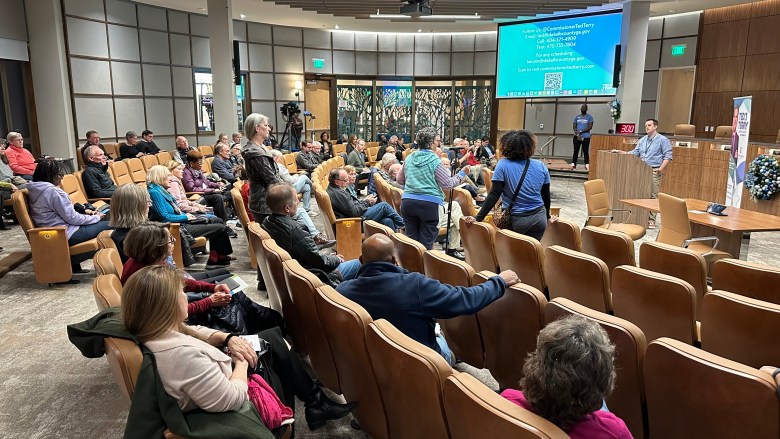
DeKalb Commissioner Ted Terry held a town hall meeting on Tuesday, Dec. 9, to discuss a recently approved $45 million hangar expansion at DeKalb-Peachtree Airport (PDK), giving residents a chance to air their thoughts about the decision.
Held at Brookhaven City Centre, Terry reviewed the process that led the DeKalb County Board of Commissioners to approve Sky Harbour’s plan to build out eight hangars on the east side of PDK to hold 16 corporate jets under a 50-year ground lease. Sky Harbour was the only applicant to a request for proposal (RFP) issued by the county in 2023.
The county is following the PDK 2040 master plan, which calls for expansion. Residents have expressed their concerns about an increase in noise and environmental pollution.
The county estimates the contract over a 50-year period could bring in $576,607,163 in revenue: $211 million of which would go to DeKalb County, $230 million to DeKalb school system, and $67 million to the City of Chamblee.
As of now, the Sky Harbour contract is still being hammered out by DeKalb’s Chief Procurement Officer Michelle Butler. Terry said the contract has not been made available to the commissioners, and he will make the details public as soon as he receives them.
“It’s very important to know what we’ve negotiated,” Terry said.
Larry Foster, a 48-year resident of unincorporated DeKalb County, said PDK is already the least safe airport in the country in terms of runway incursions. At 103 runway incursions, PDK is about seven times higher than other airports, Foster claimed.
“Approving the Sky Harbour contract will constitute the second-most damaging decision in the history of PDK Airport that impacts the health and wellbeing of the estimated one-tenth of DeKalb County’s residents who live within the approximately three to four mile radius of the airport,” Foster said.
Sky Harbour claims the number of repositioning flights will drop by 50 percent, therefore reducing noise and pollution. The company will report its findings quarterly to DeKalb.
“I want to know what happens when they fail the 50 percent reduction compliance test,” unincorporated DeKalb County resident Beth Schissel said.
The Federal Aviation Administration (FAA) defines PDK as a general aviation airport, allowing a high volume of corporate/general aviation jet traffic, 10 flight schools, a robust helicopter community, and helicopter flight instruction.
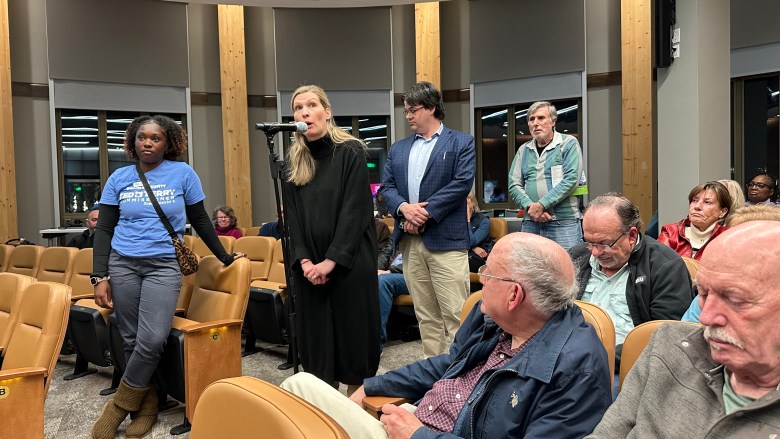
Brookhaven resident Anna Martin said she’s spoken to all of her neighbors, and “no one wants more planes coming through.”
“So here we have a new hangar being built for rich, pompous CEO jerks to fly in because they don’t like to fly commercial. That’s the truth of it,” Martin said. “I’m wondering if my husband and I might have to move.”
Terry is proposing to the DeKalb commissioners a moratorium on all new hangar development until the PDK master plan is updated, and an FAA ban on night flights except for emergencies.
The PDK voluntary curfew encourages pilots to refrain from taking off or landing between 11 p.m. and 6 a.m., yet Terry said one of his constituents emails him daily because she has been awakened by an airplane.
“How do we reduce night flights? Can we ban them? Can we take that voluntary curfew and turn it into a permission structure where they have to get permission to fly at night?” Terry asked.
Terry encouraged participants to attend the Airport Advisory Board meetings and report noise violations. A general grumbling came from the audience.
Foster said the reason people aren’t calling in noise complaints is because “they know that it’s useless.” A woman in the audience shouted: “It’s a farce.”
Between the airport and the county, there are no ongoing annual general fund contributions to an environmental health and noise impact fund, Terry said. However, once Sky Harbour is up and running, the county will set aside $1 million dollars each year for residents who are experiencing high decibel levels of noise, he said.
Jamie Dutro served on the Citizens Advisory Committee for the PDK master plan.
“We got sold down the river. We’re the ones who are going to suffer for it. What good is it that you get cancer, but the county’s going to pay for it?” Dutro said.